Music Makes Everything Better: Embroidery Review
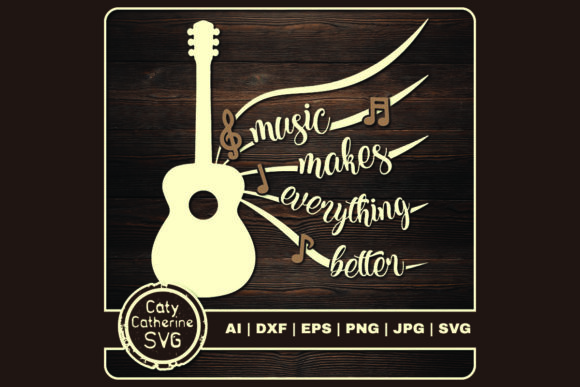
As a designer who spends half my day staring at stitch charts and the other half troubleshooting tension issues on vintage machines, I don’t just look at an embroidery file; I look at how it will survive the real world. When Music Makes Everything Better landed in my review queue, my first thought wasn’t about the cute quote itself, but about the guitar silhouette accompanying it. This is a design that screams casual cool, but does it hold up when transferred to fabric? After running several test stitches and simulating various product applications, here is my honest breakdown of this graphic asset for your craft business or personal projects.
The First Impression: Mood and Visual Personality
The phrase "Music Makes Everything Better" paired with a classic guitar shape creates an immediate sense of warmth and nostalgia. It isn’t trying to be high-fashion or minimalist; it belongs firmly in the realm of heartfelt, relatable, and lifestyle-oriented design. Visually, the layout feels balanced. The text likely wraps around or sits adjacent to the instrument, creating a cohesive unit rather than two disparate elements fighting for space. For an embroiderer, this balance is crucial because it dictates how the eye travels across the finished piece. You want the viewer to read the message and then appreciate the iconography, not get lost in cluttered details.
In terms of visual personality, this design fits perfectly into the "cozy creative" aesthetic. It appeals to musicians, music lovers, teachers, and anyone who finds solace in their hobby. It’s versatile enough for a teenager’s bedroom decor but mature enough for a coffee shop owner’s branded apron. The mood is uplifting without being overly sentimental, which makes it a safer bet for commercial merchandise where you want broad appeal.
Real-World Application: Where Does It Shine?
I’ve been thinking through specific use cases for this machine embroidery design, and there are a few standout scenarios where Music Makes Everything Better truly excels. Let’s start with custom apparel. A crewneck sweatshirt or a heavy cotton t-shirt is the natural home for this graphic. The guitar motif pairs effortlessly with denim or neutral tones. Imagine a cream-colored sweatshirt with the design centered on the chest or placed as a small left-chest logo. It feels authentic, like something you’d buy from a boutique indie brand rather than a mass-produced retailer.
Another strong contender is the tote bag. Canvas totes are a staple for Etsy sellers and craft fair vendors, and they provide a sturdy, flat surface that handles detail well. Using this design on a canvas tote immediately signals that the bag is for someone who values creativity and expression. It works particularly well as a gift item—perhaps for a music teacher, a band member, or a student heading off to college. The durability of the canvas also means the embroidery can have a bit more texture without looking overwhelmed by the fabric.
We shouldn’t overlook the potential for nursery or baby items either. While the quote is general, the musical theme translates beautifully to baby clothes, burp cloths, or crib sheets. Parents love personalized gifts that reflect their interests, and if the parents are music lovers, this design bridges the gap between adult passion and baby needs. Just ensure the scale is appropriate so it doesn’t look too busy on a tiny onesie.
Technical Considerations and Stitch Performance
When evaluating any embroidery file, the devil is in the details. How does Music Makes Everything Better handle different stitch types? Typically, designs of this nature rely on a mix of satin stitches for outlines and lettering, and fill stitches for the body of the guitar. The success of this project hinges on the stitch density. If the fill is too dense, the fabric might pucker, especially on lighter materials like tea towels or thin jersey knits. Conversely, if the fill is too sparse, the backing material might show through, giving the product a cheap appearance.
I recommend testing the stitch density on scrap fabric before committing to your final product. Pay close attention to the curves of the guitar neck and headstock. These areas often require precise satin stitching to maintain clarity. If the angles are too sharp, the thread may break or the shape may distort. Also, consider the thread colors. A high-contrast palette (like white thread on black fabric) will make the design pop, but low-contrast schemes (like beige on tan) might lose definition. Always check your design in a black-and-white mockup to ensure the shapes remain distinct regardless of color choice.
Fabric and Stabilizer Choices
The fabric texture plays a huge role in the final look. On smooth fabrics like cotton twill or polyester blends, the design will look crisp and professional. However, on highly textured fabrics like chunky knit sweaters or raw denim, the fine details of the text and guitar strings might get lost. In these cases, you might need to simplify the design or increase the size to compensate for the fabric’s irregularity.
Stabilizer selection is equally critical. For stretchy fabrics like t-shirts or caps, a cut-away stabilizer is usually necessary to prevent distortion during washing. For stable fabrics like tote bags or aprons, a tear-away might suffice, but a wash-away top stabilizer can help keep the thread sheen bright and prevent snagging. Don’t skimp on stabilizer quality; it’s the backbone of a good embroidered patch or garment decoration.
Where to Use With Caution
While this design has wide appeal, there are certain applications where Music Makes Everything Better might struggle. Small hoop sizes are risky. If you try to fit the entire design into a 4x4 inch hoop, the text may become illegible, and the guitar details could merge into a blurry blob. Similarly, curved surfaces like baseball caps or beanies require careful digitizing to account for the curve. If the design isn’t specifically optimized for curved hooping, the text might appear stretched or warped.
Avoid using this design on very thin or delicate fabrics unless you are confident in your stabilization technique. Thin silks or linens can pucker easily under the weight of a fill stitch. Additionally, be mindful of dark fabrics. If the design relies heavily on light-colored threads, ensure your machine’s lighting is adequate and that the thread contrast is sufficient. Dark fabrics can sometimes absorb light, making the embroidery look duller than intended.
Commercial Viability and Brand Value
For Etsy sellers and small shop owners, the question isn’t just "does it look good?" but "will it sell?" Designs with universal themes like music tend to have evergreen appeal. They don’t go out of style quickly, which reduces inventory risk. Furthermore, the combination of text and image allows for multiple marketing angles. You can market it as a "music lover gift," a "teacher appreciation present," or a "creative entrepreneur’s uniform."
From a branding perspective, using a clean, well-executed design like this enhances perceived value. Customers associate neat stitching and clear graphics with quality craftsmanship. If your finished products look professional, customers are more likely to leave positive reviews and return for future purchases. This is especially true for personalized gifts, where the emotional connection is heightened by the care taken in production.
Final Designer Notes
Before adding Music Makes Everything Better to your production lineup, remember to inspect the digital embroidery file thoroughly. Check for any unnecessary jumps or trims that could slow down your stitching time. Confirm the licensing terms, especially if you plan to sell finished items commercially. Some designers allow unlimited commercial use, while others restrict the number of units or require attribution.
Ultimately, this design is a solid addition to any crafter’s library. It balances sentimentality with style, offering a practical yet charming option for a variety of handmade products. Whether you’re creating a one-off gift for a friend or building a catalog of craft business items, Music Makes Everything Better provides a reliable foundation for creating engaging, high-quality embroidered goods. Test it, tweak it, and watch it bring some melody to your workbench.